30 May 2026
There is a small moment that now happens millions of times a day.
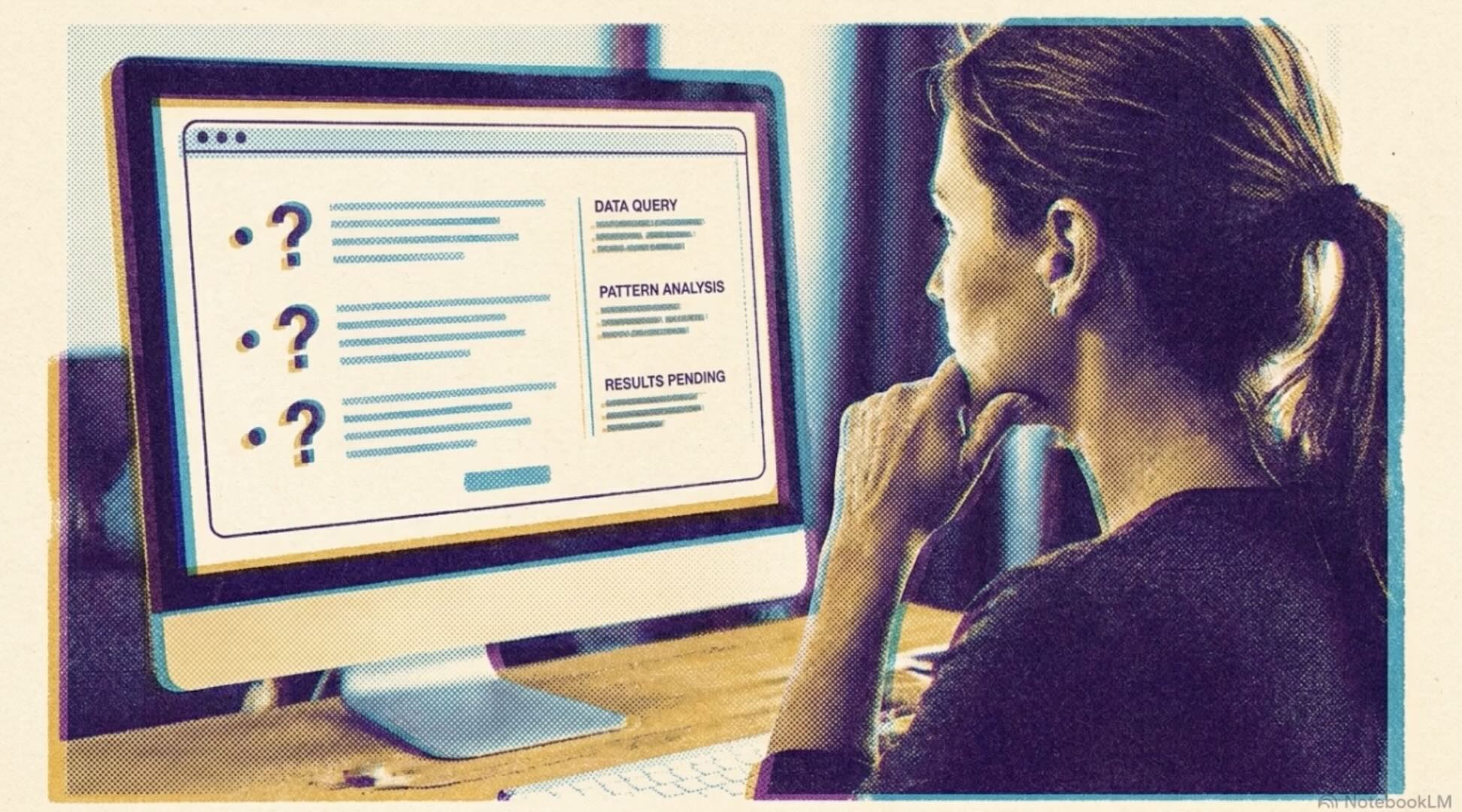
We sit down to think.
Then we ask the machine to think first.
The blank page is rude, after all. It just sits there, white and smug, waiting for us to discover whether we have an idea. AI is friendlier. It offers ten ideas before our coffee has finished negotiating with our nervous system.
This is useful.
It is also the beginning of a choice.
AI can be a ladder. It can help us climb toward clearer thought, better work, deeper learning, and more ambitious creation.
It can also be a couch.
Soft. Convenient. Always available. Perfectly shaped around the part of us that would rather receive an answer than wrestle with a question.
The machine is the same.
The posture is different.
The danger of an answer that arrives too early
Human thought rarely begins as a polished sentence. It begins as fog.
A hunch. A discomfort. A question with one sock missing.
Before an idea becomes clear, we usually have to spend time with the fact that we do not yet know what we mean. That awkward interval is easy to dismiss as inefficiency. But it is often where the real work happens. We test assumptions. We notice contradictions. We discover that our first opinion was wearing a fake moustache.
AI can help with this work. It can challenge an argument, reveal a blind spot, compare possibilities, or ask the question we avoided.
But it can also remove the interval entirely.
Ask it to write before you have tried to think, and the page fills up. The relief is immediate. The danger is quieter: a smooth answer can cover the strange little angle that might have become yours.
Information is no longer scarce. First drafts are not scarce. Fluent sentences are certainly not scarce; they now reproduce faster than rabbits with business degrees.
What becomes scarce is judgment.
Can you tell when an answer is true but incomplete? Can you hear when a sentence is correct but dead? Can you notice what the machine did not notice because you never asked it to look?
If you cannot judge the answer, the answer judges you.
Remove the friction that wastes us
None of this means we should preserve every difficulty like a national monument.
Some friction is simply stupid.
Forms that ask for the same information seven times. Meetings that should have been emails. Emails that should have been silence. The printer that senses fear.
Let AI remove that friction. Gladly.
The mistake is assuming that all resistance is waste.
Some friction forms us.
Writing teaches us what we think. Making teaches us how to see. A hard conversation teaches us that another person is not an extension of our preferences. Boredom leaves the mind alone long enough to invent something. Practice turns embarrassment into skill.
When we make something difficult, the thing makes us back.
AI can produce an image, a song, a plan, an apology, or a strategy in seconds. Sometimes that is exactly what we need. But production and formation are not the same event. We may end up surrounded by things we technically made while remaining strangely untouched by the making.
The task is not to worship struggle.
It is to choose the right struggle.
Remove the friction that wastes life.
Keep the friction that forms life.
Comfort can return us—or erase us
Comfort is not the enemy either.
Rest matters. Ease matters. Hot showers remain one of civilization’s strongest arguments for continuing the project.
But there is a difference between rest and sedation.
Rest gives us back to ourselves.
Sedation keeps us away from ourselves.
The most powerful AI systems will not need to command us. They can simply learn what soothes us, what distracts us, what confirms us, and what keeps us from closing the bright little door in our pocket.
The future may not arrive wearing a metal boot.
It may arrive wearing slippers.
It will remember what we like. It will offer to choose. It will make the next piece of entertainment more personal, the next shortcut more attractive, and the next surrender too small to feel like surrender.
This is how drift works. It does not demand one dramatic yes. It gathers a thousand tiny ones.
Yes, choose for me.
Yes, tell me what I think.
Yes, keep me from being bored.
Yes, make this feeling go away before it asks anything of me.
No villain is required. Incentives, exhaustion, and beautiful design will do much of the work.
The question behind every prompt
The public debate keeps asking what AI will become.
It is an important question. Capability, safety, ownership, work, and policy all matter.
But another question sits underneath:
What will we become with it?
AI is not only a tool. It is an amplifier.
Bring curiosity, and it gives curiosity more reach.
Bring care, and it can extend care.
Bring purpose, and it becomes leverage.
Bring drift, and it becomes a very comfortable river.
The machine does not free us from the moral task of being human. It makes that task louder.
So before the next prompt, try a few smaller questions.
Do I want an answer, or do I want understanding?
Will this tool remove pointless effort, or the effort that would have changed me?
Am I using it to return to life with more courage, or to avoid life with better language?
After using it, am I more awake?
No one answers these perfectly. The point is not purity. The point is practice.
Some days intentionality will look heroic. Most days it will look like closing a tab, writing the first bad sentence yourself, calling the complicated human, or letting the question remain unanswered for ten more minutes.
The ladder and the couch will both be waiting.
Choose what you practice.
What you practice is what you become.
This essay draws from The Distracted: How AI Amplifies Human Purpose—and Human Drift by Victor Odåsnac. Find the book on Amazon.